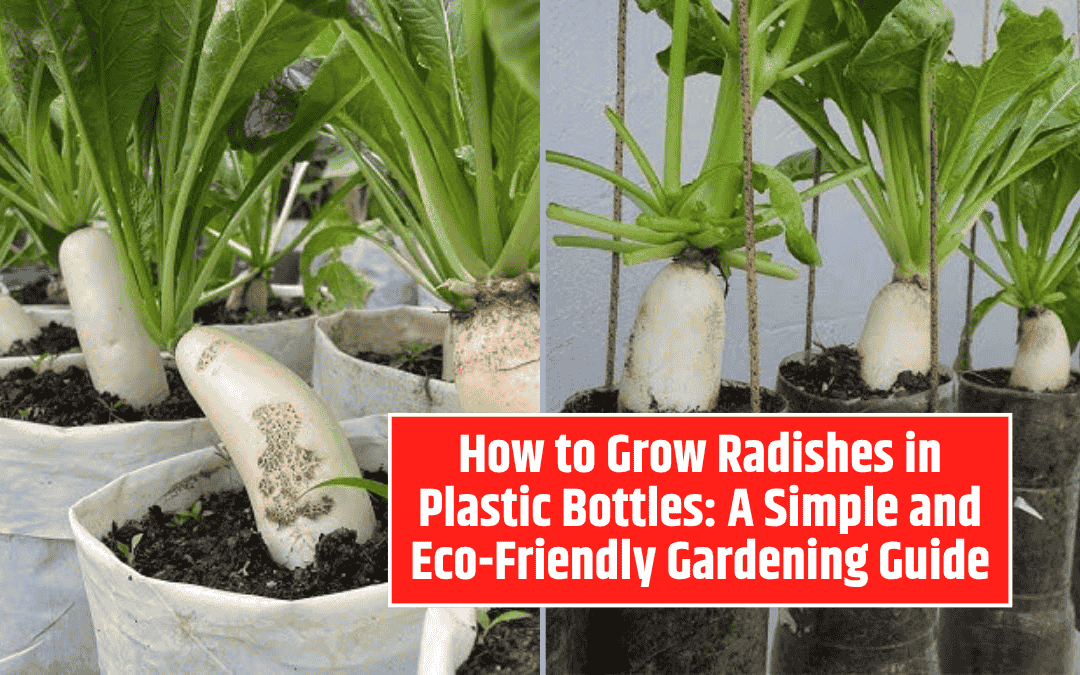
Radishes are among the fastest-growing and most versatile vegetables you can cultivate at home. Crisp, peppery, and packed with vitamin C, potassium, and antioxidants, they add a refreshing crunch to salads, sandwiches, and garnishes.
The great news? You don’t need a garden to grow them! With just a few recycled plastic bottles, you can enjoy fresh, homegrown radishes—even in small apartments, balconies, or windowsills.
This guide walks you through easy, practical steps for growing radishes in plastic bottles — a space-saving, eco-friendly, and beginner-friendly method for any urban gardener.
Why Grow Radishes in Plastic Bottles?
- Space-Saving: Perfect for small balconies, rooftops, and window ledges.
- Eco-Friendly: Reuses plastic bottles and reduces waste.
- Fast Growth: Ready to harvest in just 3–4 weeks.
- Low Maintenance: Less weeding and fewer pests.
- Beginner-Friendly: Simple setup for first-time gardeners.
Materials You’ll Need
- Plastic bottles (1–2 liters recommended)
- Utility knife or scissors
- Potting soil or compost-rich soil
- Radish seeds
- Small pebbles (optional, for drainage)
- Watering can or spray bottle
- Cotton string or cloth (optional, for self-watering system)
Step 1: Preparing the Plastic Bottle
- Wash bottles thoroughly to remove any residue.
- Cut off the top third to create a planting opening.
- Poke small drainage holes at the bottom to prevent waterlogging.
- (Optional) Insert a cotton wick through the neck to create a self-watering system that provides steady moisture.
Step 2: Adding Soil and Drainage
- Add a thin layer of small pebbles at the bottom for drainage.
- Fill the bottle with loose, nutrient-rich soil or compost, leaving 1 inch of space at the top.
- Avoid compact soil, which can restrict root growth and deform radishes.
Step 3: Planting Radish Seeds
- Evenly sprinkle radish seeds across the soil surface.
- Lightly cover them with ½ inch of soil.
- Water gently using a spray bottle or fine watering can.
- For continuous harvest, sow new seeds every week in separate bottles.
Step 4: Watering and Moisture Management
- Keep soil consistently moist but not soggy.
- Seeds germinate best in cool, damp soil within 4–7 days.
- If using a self-watering bottle, refill the water reservoir as needed.
- Avoid drought stress to prevent woody or bitter radishes.
Step 5: Sunlight and Environment
- Provide 4–6 hours of sunlight daily (indirect or direct).
- Ideal temperature range: 50–70°F (10–21°C).
- During hot weather, move bottles to a shaded area to prevent bolting.
- For indoor growth, use LED grow lights for 12–14 hours per day.
Step 6: Thinning Seedlings
- Once seedlings are 2–3 inches tall, thin them by trimming weaker plants at soil level.
- Keep the strongest seedlings spaced 2 inches apart.
- Proper thinning ensures better airflow and straight, healthy roots.
Step 7: Caring for Radishes in Plastic Bottles
- Weeding: Minimal weeding needed in bottles.
- Fertilizing: Use a balanced liquid fertilizer every 2–3 weeks if desired.
- Pest Control: Watch for aphids or fungus gnats. Use neem oil or mild soap spray.
- Mulching: Light mulch helps retain moisture in warmer climates.
Step 8: Harvesting Radishes
- Radishes mature quickly — usually 3–4 weeks after planting.
- Harvest when roots are 1–2 inches in diameter for the best flavor.
- Gently pull them from the soil to avoid damage.
- Regular harvesting encourages new growth and prevents woody roots.
Tips for Maximizing Radish Growth in Bottles
- Use Deep Bottles: Deeper containers support longer roots.
- Water Consistently: Prevent stress and bitterness.
- Avoid Overcrowding: Proper spacing = better yield.
- Rotate Bottles: Ensure even sunlight exposure.
- Succession Planting: Sow new seeds every 1–2 weeks for continuous harvest.
Benefits of Growing Radishes in Plastic Bottles
- Fresh & Nutritious: Chemical-free, crisp radishes at home.
- Eco-Friendly: Reduces plastic waste through reuse.
- Cost-Effective: No need for garden beds or pots.
- Quick Results: Harvest fresh produce in under a month.
- Beginner-Friendly: Simple setup for any home gardener.
Common Challenges and Solutions
| Problem | Cause | Solution |
|---|---|---|
| Bolting (flowering too soon) | High temperatures | Move to a shaded, cooler area |
| Tough or woody roots | Inconsistent watering or crowding | Keep soil moist; thin seedlings |
| Pest damage | Aphids or gnats | Use neem oil or mild soap spray |
| Poor germination | Dry or compact soil | Keep soil loose and evenly moist |
| Curved roots | Crowded or hard soil | Use deep, loose soil with space to grow |
Expanding Your Plastic Bottle Garden
Once you master radishes, try growing other veggies using the same technique:
- Lettuce and spinach
- Green onions and scallions
- Carrots and beets
- Herbs like basil, cilantro, and parsley
This approach lets urban gardeners create a compact, productive mini garden without the need for traditional beds.
Growing radishes in plastic bottles is a fun, eco-friendly, and space-saving way to enjoy fresh vegetables year-round. With simple materials and minimal effort, you can cultivate crisp, flavorful radishes right from your balcony, windowsill, or rooftop.
Perfect for beginners and urban dwellers, this method encourages sustainability while bringing the joy of homegrown food into your daily life. Start your plastic bottle radish garden today and enjoy the satisfaction of harvesting your own healthy, delicious produce—no backyard required!
FAQs
Can radishes really grow in plastic bottles?
Yes! Radishes grow very well in plastic bottles as long as the soil is loose, well-draining, and the container has proper drainage holes. This method is great for small spaces and urban gardening.
How long do radishes take to grow in bottles?
Radishes are one of the fastest-growing vegetables. In most cases, they’re ready to harvest within 3–4 weeks after planting.
How often should I water radishes grown in plastic bottles?
Keep the soil consistently moist but not soggy. Water lightly every day or as needed to maintain even moisture, especially during hot weather.
What type of soil should I use for growing radishes in bottles?
Use loose, nutrient-rich, and well-draining potting soil or compost mix. Avoid compact or clay soil, which can cause deformed roots.
Can I reuse the plastic bottles for multiple growing cycles?
Yes. As long as the bottles are clean, sturdy, and have proper drainage holes, they can be reused for multiple planting cycles, making them a sustainable choice for urban gardening.