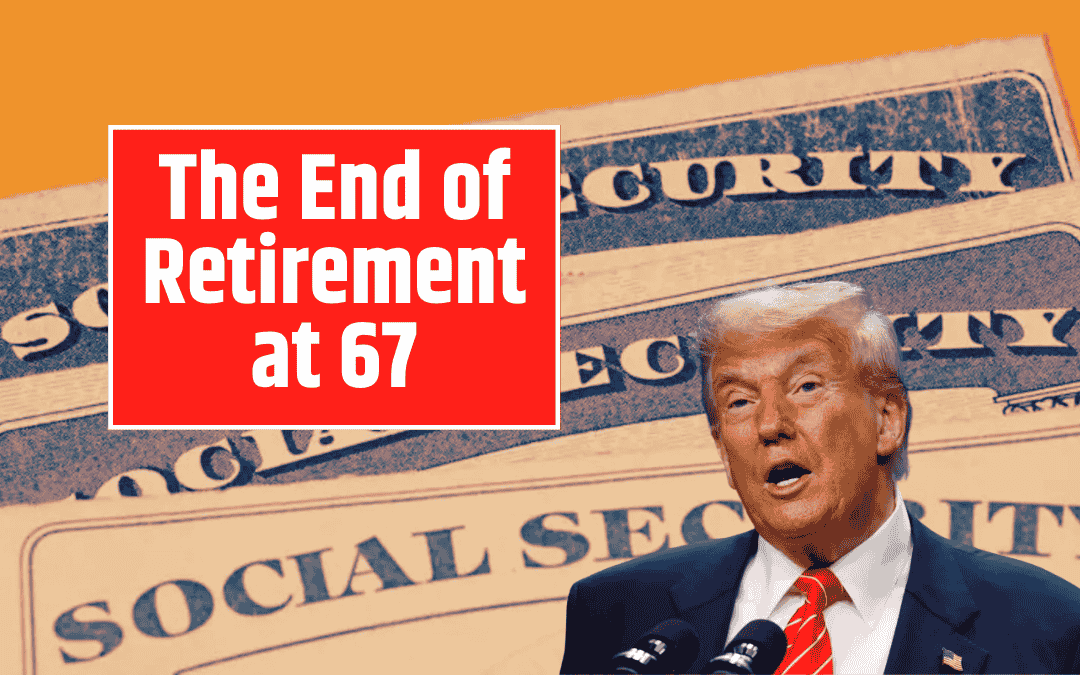
Across the nation—from New York’s skyscrapers to Los Angeles’s suburbs—the idea of retiring at 67 feels increasingly outdated. Rising life expectancy, budget strain on Social Security, and shifting political winds in Washington are reshaping the conversation.
Should the federal government push the full retirement age even higher? For millions of working Americans, the answer could redefine their futures.
Why 67 Became the “Normal” Retirement Age
The age 67 benchmark traces back to 1983, when Congress passed major amendments to stabilize Social Security’s finances. The plan gradually raised the full retirement age from 65 to 67, reflecting longer lifespans and concerns about the growing cost of benefits.
For those born in or after 1960, 67 became the age for full benefits—a new national expectation.
The Foundation Is Shifting
Today, those assumptions are under fresh scrutiny. While many Americans live longer, not all are healthier or financially secure enough to keep working into their late 60s.
At the same time, the system faces mounting strain. Fewer workers now support each retiree, creating a funding gap that threatens the sustainability of Social Security’s trust funds.
“67 Is Not Forever”: Proposals for the Next Era
Although no law currently raises the retirement age beyond 67, several proposals are gaining attention. Some policymakers and think tanks advocate lifting it to 68 or even 69 over time, with gradual implementation to ease the impact.
These phased increases—perhaps one month every two years—are designed to buy the system more longevity without a sudden shock.
Supporters and Skeptics Clash
Proponents argue that extending the retirement age reflects reality: Americans are living longer and should stay in the workforce longer. They say this change could delay the program’s insolvency and strengthen its financial footing.
Critics, however, see it as a hidden benefit cut, disproportionately harming those in physically demanding jobs or with health challenges that make later work impossible.
Real-World Consequences for Workers
Consider a 63-year-old in Chicago’s manufacturing sector. If the full retirement age climbs to 68, she might need to work several extra years—or accept reduced benefits.
In rural Texas or Alabama, where jobs are often physical and less secure, pushing retirement later could mean more people forced into disability programs or struggling to stay employed as their bodies age.
The Politics of Aging in Washington
In Congress, the debate is as much political as fiscal. Lawmakers from states with large retiree populations—such as Florida, Arizona, and Michigan—warn that a higher age threshold would hit low- and middle-income workers hardest.
The divide reflects deeper tensions between balancing budgets and protecting vulnerable citizens who depend heavily on Social Security benefits.
Counting the Cost of Change
Analysts estimate that raising the retirement age to 69 could cost retirees tens of thousands of dollars over their lifetime. Some forecasts suggest losses approaching $100,000 in total benefits for typical earners retiring under new rules.
Even with those savings, projections show the Social Security trust fund could still face depletion in the early 2030s without broader fiscal reform.
Unequal Aging, Unequal Impact
Not all Americans age the same. Professionals in office jobs or flexible careers may extend their working years comfortably. But construction workers, nurses, and service employees face declining physical capacity well before 70.
These disparities underline a moral question: should one national age apply equally to those with vastly different health and labor realities?
Preparing for What Comes Next
If you’re early in your career, plan for the possibility that 67 may not hold. Boost retirement savings through IRAs and 401(k)s, diversify investments, and explore flexible late-career work options.
For those nearing retirement, track congressional developments and work with financial planners to model scenarios under both current and potential new retirement schedules.
A New Chapter in America’s Social Contract
The age of 67 was once a promise of security—a finish line for decades of work. Today, it’s a policy under review. As demographics shift and fiscal pressures mount, the conversation about redefining retirement is no longer hypothetical. Whether the next full retirement age is 67, 68, or beyond, the time to prepare is now.
FAQs
Why might the U.S. raise the retirement age beyond 67?
Rising life expectancy and pressure on the Social Security trust fund have prompted some policymakers to suggest gradually raising the full retirement age to 68 or 69 to preserve program solvency.
Who would be most affected by a higher retirement age?
Workers in physically demanding jobs or those with health challenges may be hit hardest, as they are less likely to continue working into their late 60s compared to office or professional workers.
Would raising the retirement age fix Social Security’s financial problems?
Not entirely. While it could extend the trust fund’s life, experts say additional measures such as tax adjustments or benefit reforms would still be necessary.
What can individuals do to prepare?
Younger workers should save more through IRAs or 401(k)s and consider flexible late-career options. Those nearing retirement should monitor legislative changes and consult financial planners for scenario modeling.